An excerpt from Costa’s War by Mark Rubinstein was featured in The Havok Journal. You can read the full excerpt here.
Season of Fear Reviewed by Baum on Books
Mark Rubinstein’s Season of Fear was reviewed by Joan Baum for her Baum on Books podcast. She writes:
Some thrillers chill even when the outcome’s obvious – you know who’s targeted, by whom, and why. What author Mark Rubinstein knows how to do well, however, is keep the tension high about when. In Season of Fear, his latest crime novel, he creates a suspenseful narrative with his skill as an experienced psychiatrist and author. He’s so good at describing panic and fright in excruciating physical and psychological detail that these effects become the main focus of the novel, over cause of the fear. Along the way, he also manages to inject concern about anti-anxiety medications and having guns.
The tension in the novel begins when Dr. John Randall, a psychiatrist, and his lawyer wife Ellen find themselves being stalked and increasingly step up pills and alcohol to cope. What else to do when threats keep rising and the police are unable to do anything without incontrovertible evidence? How to live naturally when your life is suddenly upended by a madman on the loose? In fact, two madmen.
It’s November 2020. Charles Davis, a deranged psychotic, the former animal control officer for Bridgeport, has just escaped from a locked cell at Yale Psychiatric Hospital and seeks to kill all the dogs and cats in town and anyone who would stop him. That includes Dr. Randall because he had been called in to do a fitness-for-duty psychiatric evaluation of the 28-year-old schizophrenic who believes that John is at the head of a conspiracy with the animals to take over the city. Then there’s Ed Gannon, a police officer, whose case John has recently agreed to review, a huge hulk of a man with the features and build of a brawling NFL lineman –“gnarled knuckles,” “fists the size of lunch boxes.” And a nasty attitude. He knows the routine, he’s clever, defensive, menacing. He wants a desk job with the police. No way he’s going to get it, which he senses. Slowly, ominous events occur — hang-up calls: the road death of an associate of John, strange meetings in stores, bloodied rats in the Randalls’ bedroom. The memories become like “loathsome parasites that have taken up rent-free residence in [Ellen’s] brain.” That’s what fear and dire expectations do, John knows, “they distort your perceptions.” And panic sets in.
Rubinstein knows the law and the limits to which people can count on the courts or police if their suspicions have grounds, but proof is circumstantial. Can’t a stranger suddenly eat or shop where you do? Take the same elevator? Idle a car at the curb outside your house? Travel on the same parkway? Even confront your seven-year-old daughter and tell her she’s pretty, and he’d he’d like to have someone like her? One of the disturbing features of Season of Fear has to do with having a gun for self-protection. John reluctantly decides it’s necessary and gets a pistol from his neighbor, a Vietnam vet who teaches him how to shoot. The nice-guy neighbor is a beekeeper and tells John what bees do to protect their queen.
In retrospect, the book’s two epigraphs suggest how the nightmare will conclude. The first is from Pliny the Elder –“the only certainty is that nothing is certain.” The second is from playwright David Mamet: “A good thriller must have an ending that’s inevitable but predictable.”
Acclaimed Authors Tell It Like It Is
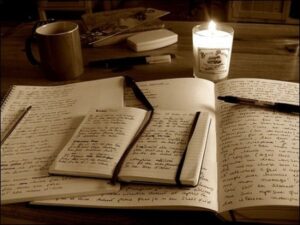 Over the years, I’ve had the good fortune to interview many acclaimed authors. They answer questions with refreshing candor. Here are some of the most successful writers telling it like it is.
You left your day job to write full-time. What’s surprised you about the writing life?
It’s much easier to lie on the couch and eat potato chips or watch Better Call Saul than sit down and write another paragraph. I’ve had to relearn self-discipline in writing these books. Alex Grecian, talking about The Harvest Man
What would you be doing if you weren’t writing?
I have no other marketable skills. I’m disorganized, forgetful, and easily distracted. I don’t know what I would be doing. Frankly, that’s part of what makes me a writer. Writing is a form of desperation. Most writers aren’t capable of handling a real job in society. This is all we have. So, this is what I do. Harlan Coben, talking about The Stranger
How come most of your novels are filled with moral ambiguity?
The vast majority of what we call morality is simply fear of being caught. Just look at any comment section in articles on the Internet, where people remain anonymous and say whatever they think. Or, watch people when they’re driving their cars. Maybe a small percentage of us with moral fiber will categorically not do certain things, even if we’re not being watched, but with the vast majority, all bets are off. Dennis Lehane, talking about World Gone By
Do you have ‘high literary ambitions’?
Of course, I aspire, but the reality for me as a writer is simple: I’ve always had a grating voice–even as a child–and you can never get away from your own voice. Candace Bushnell, talking about Killing Monica
Your conflictual dialogue is incredible. Were there lots of arguments in your family–shouting at the top of peoples’ lungs?
No. I think that’s the Italians. We Jews just bear grudges until the end of time. (Laughter). My father was very fond of the phrase, ‘Shut up and sit down.’ So there you have it. But I did go into poetry because that’s where the money is. (More laughter). David Mamet, talking about his novella, Three War Stories
How important is character in your writing?
All good stories are character-driven. It’s a question of degree. Human beings are wired to care much more about who than about what. In fact, we won’t care at all about what, unless we first care about who. Barry Eisler, talking about Graveyard of Memories.
What advice do you have for young writers?
Young writers have a serious problem: they don’t know anything. They think they do, but they don’t. Eventually, they will know something because knowing life comes with living it. My basic advice for someone who’s twenty-two years old is to join the army. John Sandford, talking about Field of Prey
Inspector Rebus drinks quite a bit, doesn’t he?
One of my hobbies is drinking beer in the less salubrious bars of Edinburgh. So Rebus drinks in the Oxford bar. It’s just booze and conversation. And of course, I have to go there for research. (Laughter). Ian Rankin, talking about his John Rebus novels
As president of the Mystery Writers of America, what trends do you see in mystery fiction?
Publishing is in freefall. Nobody knows where anything is going. Will e-books transform everything? Will self-publishing be the fate of all writers except for James Patterson and a few others? Sara Paretsky, talking about Brushback.
Mickey Haller is one of the most intriguing characters in contemporary fiction. Is he based on anyone you know?
Writers take from everywhere. Years ago, I met a guy–a lawyer–at a baseball game. During the game, we talked about our lives. He told me he worked out of the back seat of his car. I thought that was an intriguing set-up and someday I might write about that. Michael Connelly, talking about The Lincoln Lawyer.
How do you feel if a day goes by and you haven’t written?
Anxious. Very anxious. (Laughter). I feel guilty. I should be home writing. I feel as though I’m shirking. I think this writing addiction is like a dope-driven rush. When it’s going well, it’s a real high. When it’s going badly, it feels like it’s just a job. I try taking Sundays off. I sort of get away with that because I feel like I’m improving myself (More laughter). Don Winslow, talking about The Cartel.
If you weren’t a writer, what would you be doing?
It would be quite exasperating. I did so many things. I started out as a lawyer. Then I went into advertising, and eventually drifted into journalism. There are all sorts of things I could have been doing, but perhaps like Bernie Gunther, I may be temperamentally unemployable. Phillip Kerr, talking about The Lady from Zagreb
The premise of The Fixer is fascinating. Tell us about it.
While I was writing the book, my father died. I realized all I knew about my father was what I saw in the family. There are aspects of your parents you never know. They had lives before they had kids. The Fixer turned into a story about a son discovering what his father’s life was really about. That’s what I was going through myself. It’s the most personal book I’ve ever written. Joseph Finder, talking about The Fixer
I’m sure you know that Arthur Conan Doyle was sick of Sherlock Holmes and wanted to kill him off. What about Sue Grafton and Kinsey Millhone?
I’ll never get sick of Miss Millhone. She’s largely based on me. Who can get sick of one’s self?
Sue Grafton, talking about her novel X.
What’s in a Name?

We’re familiar with Shakespeare’s famous lines from Romeo and Juliet in which Juliet says the names of things don’t matter; the important thing is what they are.
What’s in a name? That which we call a rose
By any other name would smell as sweet
While that’s very true in botany, in fiction, characters’ names may matter a great deal. A name can become a device by which a reader visualizes, hears, and even senses a particular character.
Certainly, the name “Hannibal” makes one think of Thomas Harris’ malevolent character in Silence of the Lambs. Similarly, “Stingo” summons William Styron’s callow protagonist from Sophie’s Choice. “Garp” brings to mind the idiosyncratic man from John Irving’s The World According to Garp. Think of other characters in literature: Ahab; Hamlet; Ishmael; Raskolnikov; Scrooge; Achilles; Dr. Jekyll and Mr. Hyde. These names evoke thoughts of compelling characters and their traits.
Many writers choose names readers will easily recall—those that will resonate in the reader’s mind. And, many writers agree the names should have some acoustic quality making them memorable.
Most writers choose dissimilar names for different characters so the reader doesn’t confuse one character for another (as may occur in Russian novels). A writer certainly doesn’t want to force a reader to backtrack through a novel, trying to clarify is speaking or acting.
So, how does a writer go about picking characters’ names?
Some writers go to the telephone book, perusing lists of names appropriate names. Others listen to the names of people they encounter during the course of everyday life, while some may describe a character to friends or relatives and ask for name suggestions.
Harlan Coben sometimes offers to name characters after people who bought his current novel; submit proof of purchase; and thereby become eligible for a character to have the buyer’s name in a subsequent novel. A writer as popular as Coben, garners a cascade of names, and engages readers in his efforts. It’s also a great promotional idea.
There’s the old standby: naming characters after relatives, friends and acquaintances. I do this frequently with secondary characters. I’ve occasionally named a major character after someone I know—using the person’s full name. In one instance, I thought a physician-friend’s name was perfect for a villain’s, and used it—but only after conferring with my doctor friend, who not only understood, but agreed and wholeheartedly endorsed my using his name.
In some novels, I’ve made mention of a friend in setting up a protagonist’s background or back-story. One psychiatrist friend telephoned me after reading the novel. He was delighted to learn that in his novelistic iteration, he was not only a shrink, but owned a Blimpie franchise in Westchester County, New York. We laughed together about his fictional investment and managerial acumen.
But by whichever method a writer selects a name, it must fit and become emblematic of that character. Reading or even mentioning the character’s name should bring to mind an entire set of personality traits; a certain look; sound; and feeling tone. The name should evoke a strong image in the reader’s mind, and have an audacious ring of authenticity.
After all, no writer wants a rose to evoke the scent of a chrysanthemum. Or far worse, the smell of a stinkweed.
Mark Rubinstein
Author of Mad Dog House and Mad Dog Justice, Mad Dog Vengeance, Love Gone Mad and many more. His latest published novel is A Splendid Death
Torture May Be the Best Way
Poisoned by his lustful quest for vengeance, his obsession carries his crew to their demise.
(Ahab, Moby Dick)
The king goes slowly insane because of his mistakes and his daughters’ perfidy.
(Lear, King Lear)
She was forced to make a choice between two unbearable, unthinkable options.
(Sophie, Sophie’s Choice)
Their marriage, finances and lives were bankrupt; and now he is suspected of her murder.
(Nick and Amy Dunne, Gone Girl)
She could not stop remembering the sound of the spring lambs being slaughtered.
(Clarice Starling, The Silence of the Lambs)
Take the character to hell (either physically or mentally), and if well-drawn, the reader will really care about this person. All of us can relate to the torture of being alive in an indifferent world.
When I think about building a character for a novel, my task is to create someone who inhabits a world where aspects of his personality and life-experiences are the spawning grounds for an emotionally charged and conflicted existence.
Stephen King’s On Writing advises writers to imbue their characters with honest voices, to make them people with faults, passions, weaknesses and strengths. These characteristics make them human. We can relate to them, whether they be a king; concentration camp survivor; detective; duplicitous couple; or sea captain, because their fictional lives intersect with ours and make us connect with them. The link can be one of intense compassion or absolute revulsion, but nonetheless, it is a bond. It relates to the character’s tortured and anguished existence.
All of us have felt victimized by the randomness of life. No one has escaped the seemingly unfair punishment brought upon us through pure happenstance. Recent events like the 2001 terrorist attacks or the devastation brought about by storms like Sandy remind us of the tenuous nature of existence.
Worthy fiction draws us into a world where the characters are emotionally driven and tortured. Their mistakes and triumphs must resonate as real. Human nature doesn’t change. That’s why the stories in the Iliad and the collection of works by Shakespeare are as relevant now as they were eons ago.
There’s plenty of advice about developing characters. Guidance ranges from drawing a detailed profile of each one, describing physical appearance and personality traits, to making a timeline charting the character’s history in the context of the novel.
All of this is solid and practical guidance.
But in my opinion, what matters most is this: the character must suffer turmoil and torture, presented in the context of a story that allows the reader to surrender control and enter the fictional but believable world you have created.
To varying degrees, and at different times throughout our lives, we are all tortured souls.
The life of a well-developed, memorable fictional character must be, too.
What If?
“What if?” The Big Question
Previously, I discussed the almost dreamlike process by which I write a novel. There is a coalescence of past and present; the melding of my own and others’ experiences. The article concluded by saying that drawing from life and imagination is at the heart of my novels, but each story begins in a unique way.
I’ve often been asked how the concept for Love Gone Mad originated, given its twists, turns and many machinations. Readers want to know how the initial idea came into being. I recall a specific incident that led to the thought of the novel.
My office is located on the second-floor of a small commercial building. A real estate office is on the first floor.
One afternoon, after seeing my last patient, I walked through the downstairs brokerage office to chat for a few minutes with the people there. The receptionist was at her desk. Sitting nearby, was her very cute and bright six-year old daughter, Sara. The child had no school that day, so her mother had brought her to work.
Walking by Sara, I smiled and waved. She returned the greeting and said, “You know…you remind me of my dad…”
Assuming this was a flattering comparison, I replied, “Well, you’re a great kid. I wish you were my kid…”
“You’d have to marry my mom…” she said, a huge grin spreading across her freckled face.
We all laughed, while her mother, only one desk away, blushed to a crimson red.
It was a cute, funny little exchange. Outside, as I was about to get into my car, I had the strangest thought: What if?
What if a married man with a young daughter—suddenly developed the notion the child wasn’t his own. What if he began believing with all his heart, this child was the result of his wife having had an affair? What complications could arise? What if he’s wrong? Or, what if he’s correct in his unsubstantiated assumption. How would he know? What about DNA testing? Where would all this lead?
I began writing Love Gone Mad with that What if? premise in mind. Soon, more complexities, complications and permutations evolved, so by the novel’s third draft, the plotline went far beyond the initial What if?
You can apply the What if? question to virtually any situation.
What if you’re involved in a minor fender-bender and the other driver is a revenge-driven lunatic who begins stalking you?
What if a beautiful woman (or handsome man) you’ve been furtively eyeing in a restaurant approaches you and asks, “Don’t you remember me?” Now suppose you have no recollection of that person. What might that lead to? What possible complications could materialize in your life? Is this possibly an indication of something larger—even something ominous?
A friend once told me he and his wife were in a restaurant when a woman approached and dropped her business card onto the table while his wife was in the restroom. It was a blatant—even outrageous—invitation. What if he’d decided to pursue something with this stranger? Would it lead to complications far beyond being some kind of tryst? What if there was a conspiracy behind it?
When I interviewed best-selling author Andrew Gross, he said the opening premise of his novel 15 Seconds approximates something that happened to him in his life. He was stopped by the Houston police because of a minor traffic violation. It escalated and he was pulled out of his car, handcuffed, arrested and thrown in the back of a squad car. Sitting there, his mind started going and he realized “I may have something here.”
In that instance, Andrew Gross took a disturbingly personal incident and wove it into a complex and multi-layered thriller. “The best of lives can fall apart in 15 seconds,” he said, and it seems to me the jumping off point for a good thriller’s plot can form if you ask yourself, What if?
With the What if? as an opening premise, you can take fact, fantasy, personal experience and a variety of elements from your own and other people’s lives and weave them into the narrative arc of a suspense-thriller novel. If you allow one “What if?” to play off another, the process of imaginative storytelling can take over. One thing can morph into another and the story may begin taking unforeseen twists, turns and complications.
Turning reality on its head and posing the What if? question can be the first step taken to telling a compelling tale.
Don’t Knock Thrillers
A thriller is not a cozy mystery or a whodunit. It’s a novel or play in which a threat to the life or well-being of the protagonist and/or other significant characters is paramount. Catastrophe will occur if the hero doesn’t act decisively, and if necessary, with violence.

Who are the greatest thriller writers? The bestseller lists are often dominated by thrillers, so you can take your pick.
But, have you ever considered that Shakespeare, Dostoyevsky, Homer, Virgil, and other giants of literature were some of the best thriller writers of all time?
“They wrote thrillers?” you ask.
Of course they did. Let me explain, and address some common misconceptions along the way.
To begin, a thriller is not a cozy mystery or a whodunit. It’s a novel or play in which a threat to the life or well-being of the protagonist and/or other significant characters is paramount. Catastrophe will occur if the hero doesn’t act decisively, and if necessary, with violence. A sense of urgency pervades a thriller–the clock is always ticking. And the stakes are extremely high.
The Iliad, The Odyssey, Hamlet and Macbeth are pulse-pounding thrillers. Think of Raskolnikov and the riveting axe scene in Dostoyevsky’s Crime and Punishment. What will happen to Jean Valjean as he tries to escape the clutches of Javert in Hugo’s Les Miserables? Will Uncas, Hawkeye and Cora survive their ordeals in James Fenimore Cooper’s The Last of the Mohicans? Will Edmond Dantes survive to take revenge on the men responsible for his unjust imprisonment in Dumas’s The Count of Monte Cristo?
Many great novels and plays were immensely popular, and made their way to the big screen. Consider Dracula, Ivanhoe, Moby Dick, Apocalypse Now (based on Joseph Conrad’s Heart of Darkness), and Slaughterhouse Five, among many others.
Modern-day thrillers haven’t been around long enough to enjoy the acclaim of the classics, but many have become blockbuster films, embedding themselves in popular culture. Think Gone Girl, The Day of the Jackal, Reacher, The Bourne Identity, The Hunger Games, The Godfather, and Silence of the Lambs. The huge popularity of these novels and their movie progeny may be responsible for thrillers being viewed as “lesser” works by some segments of the literary establishment. That assessment is unfair to a number of today’s talented storytellers.
Yes, Shakespeare, Homer, and Virgil penned suspense-filled thrillers. The plays of Aeschylus, Sophocles and Euripides brimmed with danger, fear and blood-letting. Robert Louis Stevenson, Miguel de Cervantes, Earnest Hemingway, Charles Dickens (the most popular writer of his day, and derided in some intellectual circles), Defoe, Melville, Hawthorne, Conrad, Scott, and Tolstoy were thriller writers. Their works have been elevated to the status of literary classics because they were well-written, pulse-pounding forays into suspense, suspicion, fear, paranoia, murder, guilt and retribution.
Yes, these literary masters wrote thrillers.
So, the next time you check out the bestseller list, don’t knock the thrillers.
Mark Rubinstein
Author of Mad Dog House, Mad Dog Justice and Love Gone Mad and others.
Can We Ever Change Who We Are?
 As a psychiatrist and novelist concerned with people’s inner conflicts, I’m often asked whether or not people can truly change.
Can we ever change their basic personality styles?
The answer is: yes, and no.
Most mental health professionals agree that basic personality style (our deeply embedded traits and tendencies) are ingrained by the time we’re adolescents. Yes, there can be some minor modifications after that, but our basic way of interacting with others is pretty much set by the time we’re seventeen or eighteen. We interact with others in a fairly inflexible and ingrained way. It’s our “way of being.”
So what about someone seeking psychotherapy because of unhappiness with relationships and how life is going? What about the person who repeats endlessly the same maladaptive patterns of behavior leading to frustration, failure, unhappiness, and even depression? Or the person whose relationships are tainted by neediness, or dependency, or the wish to dominate others; or any other traits that make for problems interacting with people?
You’ll notice these aren’t symptoms such as a phobia, or panic episodes, or an onset of a symptom causing psychic distress. Rather, these are enduring personality traits, not temporary states of being.
The goal of any psychotherapy is to help a person develop a better understanding of one’s self. It’s called insight. Hopefully, by developing an awareness of personality pitfalls, a person can recognize them, and nip them in the bud before they exert themselves and ruin relationships. If this can be accomplished, the person may experience less conflict or tension with other people, and lead a more fulfilling life.
For example, a man comes for counseling because he’s been fired from three different jobs. During sessions (to which he always arrives late), he realizes that even going back to elementary school, he undermined his own success by tardiness and by not completing tasks on time. In high school, he received Cs instead of As because he never submitted his work by the stated deadline. In business, he repeated the same pattern. He also learns in the psychotherapy sessions, that as a child, being late or dawdling was a way to get much coveted attention from his parents. Without realizing it, throughout his adult life, he’s been repeating this pattern with every authority figure. And of course, this has been the source of conflict, failure, firings and general unhappiness throughout his adult life.
With awareness of this tendency, he can begin working to change this maladaptive and self-destructive behavioral pattern—this deeply ingrained trait. He may not always be successful in this effort, but some positive and adaptive changes in his behavior can begin to occur.
While his trait may not have been eradicated, his behavior and interactions with others can begin to effectively change.
I like to think of it in this simple way: imagine personality style as a ninety-degree angle. If a person can move that angle a mere three degrees, then a significant change in how one interactswith other people is surely possible. This can lead to positive changes.
So once again, can people “change” their basic personality patterns?
“Yes, and no.” While they don’t alter their basic personalities, through insight, they can change their behavior and become more skillful in their interactions.
Mark Rubinstein, M.D.
Mark Rubinstein’s book Bedlam’s Door: True Tales of Madness and Hope, is a non-fiction memoir with actual patients’ stories that read like fiction.
The Emotional Carryover of Writing Novels
The Emotional Carryover of Writing Novels
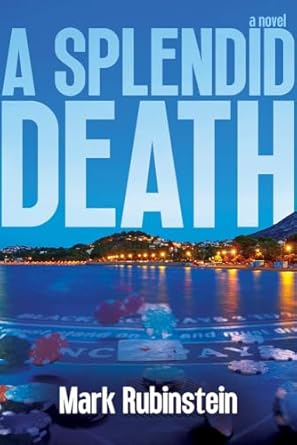
Writing is an emotionally draining and solitary business. You spend hour upon hour alone with your thoughts and fantasies, doing your best to order, re-order and transform them into coherent stories people will want to read. Like any other endeavor, you have good days and bad days. Sometimes you feel exhilarated; at other times you feel frustrated and exhausted. As they say, it goes with the territory.
My wife has noticed what she’s called “carryover” from a day’s writing. She can tell if I’ve been working on an intense scene or chapter—one with plenty of action or anger, or one brimming with life-altering (even murderous) conflicts between characters. She picks up on the energy writing has generated within me. It doesn’t simply dissipate when the day’s writing is finished. It carries over for a while.
Linda says she can tell from my mood where the writing has taken me: whether to a love scene, an interchange between close friends, or a violent confrontation (verbal or otherwise) between characters in the novel I’m writing. It’s not that I become the characters I’ve been dealing with all day, but some of what makes them real spills over, at least for a time, into my life.
Linda can tell whether or not I’ve had a good or bad day writing. It’s not very different from what any spouse can perceive about a partner’s day. But, maybe it’s even more pronounced for a writer. My boss and unforgiving taskmaster is my imagination.
My characters and their dynamisms derive from some hidden (or maybe not-so-well buried) place within me. They flow from my thoughts, fantasies, feelings, and experiences. I cannot “leave them behind” at the office.
Writing is demanding—even depleting. Although I don’t commute to a job, I’m at a desk in my home, all day, every day. I don’t take a day off. Ever.
When I practiced psychiatry, I also worked in a kind of isolation. Seeing patients was never a true social connection. It would have been inappropriate to share my personal life with patients. The nature of psychotherapy prohibits social interaction. After all, you are not a patient’s friend. When I had a private practice, I relished opportunities to get out and socialize with friends. However, as a writer, I find the work immensely satisfying, but emotionally draining. As a carryover, Linda has noticed I now want to dole out carefully the time I spend with friends. After enjoying a good meal at home, I want nothing more than to settle in with a book, surrounded by my dogs, until bedtime.
This is not the case for every fiction writer; after all, Elaine’s (the once-famous New York eatery) used to be packed every night with literary luminaries. But for me, creating conflict-driven characters, placing them in daunting situations, providing them with action-oriented dialogue—using my imagination and telling high-octane stories of suspense and tension—seem to have spilled over into my real life.
I won’t be surprised if Linda posts a “Do Not Disturb: Writer at Work” sign on our front door. I’m glad she loves and understands me and the characters I create.
Mark Rubinstein
Author of Mad Dog House, Love Gone Mad, The Foot Soldier, Mad Dog Vengeance, Downfall, A Lethal Question, A Splendid Death, and others
Your Brain on Books
I was fascinated by an article in the Science section of The Independent, a British newspaper. http://www.independent.co.uk/news/science/brain-function-boosted-for-days-after-reading-a-novel-9028302.html Dated January 4, 2014, the article noted research done at Emory University. It revealed that reading a gripping novel can trigger measurable changes in brain function lingering for as long as five days. The research found that reading a compelling book may cause heightened connectivity and neurological changes in the brain which registered in the left temporal cortex, an area associated with language reception and other important brain functions such as sensory and motor activity.
The article quoted Professor Gregory Berns, a neuroscientist and author of the study, who said, “The neural changes we found associated with physical sensation and movement systems suggest that reading a novel can transport you into the body of the protagonist. We already knew that good stories can put you in someone else’s shoes in a figurative sense. Now we’re seeing that something may also be happening biologically.”
The article provided details of the study which involved students reading, a 2003 thriller, Pompeii, by Robert Harris which was chosen for its page-turning plot and strong narrative drive.
MRI scans showed “neurological changes continuing for as long as five days after reading.”
Professor Berns said, “Even though the participants were not actually reading the novel while in the scanner, they retained this heightened connectivity. We call that ‘shadow activity,’ almost like a muscle memory.”
The article generated many comments in The Independent and some controversy, since some people interpreted the findings as hinting that reading could “substitute” for actually engaging in physical activities.
Of course, the study does not imply that.
For me, the study confirms what is intuitive for many of us: reading compelling novels causes mental and emotional arousal in the reader. This would, of course, involve the brain and its various functions—especially those involved with receptivity and the process of identifying with a protagonist. (Maybe even feeling we inhabit his or her body in suspenseful situations).
How many times have we read novels where we fear for the protagonist; or feel our pulses throb (Hence, “pulse-pounding” fiction, used so often in describing suspense/thriller novels). Don’t we feel exhilarated when the protagonist brings order to chaos? Do not these feeling states in the reader imply identification with the protagonist; sharing the same conflict or problem; feeling, seeing, and hearing what he or she does? We care what happens in the protagonist’s imaginative world. Isn’t it a true identification with the character? (Inhabiting his or her body, mind and situation).
These findings confirm what many of us have always known: depending on the novel, reading can cause arousal; fear; hunger; revulsion; warmth; satisfaction; exhilaration and a host of mental and emotional states in the reader. Now, we know there are measurable physiological correlates—altered brain activity. Does this mean reading takes you to other worlds besides one’s own? Yes. Does reading promote brain activity and thus, brain health? I think so. Does it imply that mental decline in the elderly may be forestalled by reading? That may very well be the case.
The most provocative aspect of the study is the finding that heightened brain function—connectivity and language receptivity—lasts for days after one has stopped reading. The implications of this finding are not yet clear.
But one thing is certain: keep reading!
Mark Rubinstein
- 1
- 2
- 3
- …
- 46
- Next Page »